
Psychologisch Consulent
Charlotte De Jonckheere
Brainspotting Therapy
"Stillness isn't empty, it's where our body finally starts to speak."


What is Brainspotting therapy?
Brainspotting is a body-based therapy that helps process trauma, stress, and emotional blocks. Developed by Dr. David Grand, it is based on a simple idea: where you look affects how you feel.
By identifying a specific eye position called a brainspot, Brainspotting helps your brain access deeply stored experiences that are often hard to put into words. Your body and brain do the healing work in a safe, supportive setting, allowing you to process and release what has been stuck.
How does Brainspotting work?
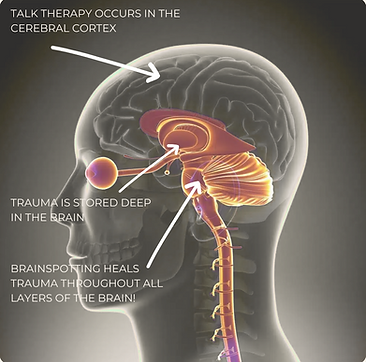
Brainspotting works with the deeper parts of your brain where emotions, memories, and bodily responses are stored — areas that aren’t always reachable through talking alone.
Trauma can become “stuck” in the body and nervous system. When overwhelming events occur — especially early or repeated trauma — the brain may not fully process them. Memories, feelings, and body sensations can stay stored, resurfacing later as anxiety, stress, emotional reactions, or physical tension. Brainspotting helps your brain finish what was left unfinished.
By focusing on specific eye positions and gently noticing what happens in your body, your nervous system is activated and your brain can naturally process and release stored trauma. You don’t need to explain or analyse everything — your brain knows what to do.
Focused Mindfulness
Focused mindfulness is when you gently hold your attention on a brainspot while staying open to whatever arises inside, without judging or analysing it.
During this process, you may notice:
-
emotions
-
body sensations
-
images or memories
-
changes in breathing or tension
You don’t need to make sense of these experiences or talk about them in detail. Simply noticing them allows your brain to process and release what has been stuck, leading to healing and regulation.
What to expect from our session together?
-
We will talk very little; most of the focus is on what you feel inside.
-
I will guide your eyes, and together we will pay attention to your body and emotions.
-
We move at a slow, safe pace, adjusting to what your nervous system can handle.
-
Some sessions may include gentle bilateral music to support relaxation.
-
Each session is unique, and we adapt as we go — your experience will guide the process.
Sessions usually last 30–90 minutes, depending on your needs.
What Brainspotting can help with?
Brainspotting may help with:
-
trauma and PTSD (including complex or early trauma)
-
anxiety, panic, and chronic stress
-
depression
-
grief and loss
-
emotional blocks
-
chronic pain and physical tension
-
performance anxiety (sports, work, creativity)
-
attachment and relationship issues
Key benefits:
-
Deep, body-focused healing
-
Suitable for those who find talking difficult
-
Gentle yet powerful
-
Often effective in fewer sessions than traditional talk therapy

Practice locations
Monday and Thursday: De Cocon, Werken – Kortemark
Wednesday: Soulotus, Moerkerke – Damme